
Nov 10,2023
Zinc-nickel alloy passivator: how to improve the corrosion resistance of electroplated parts?
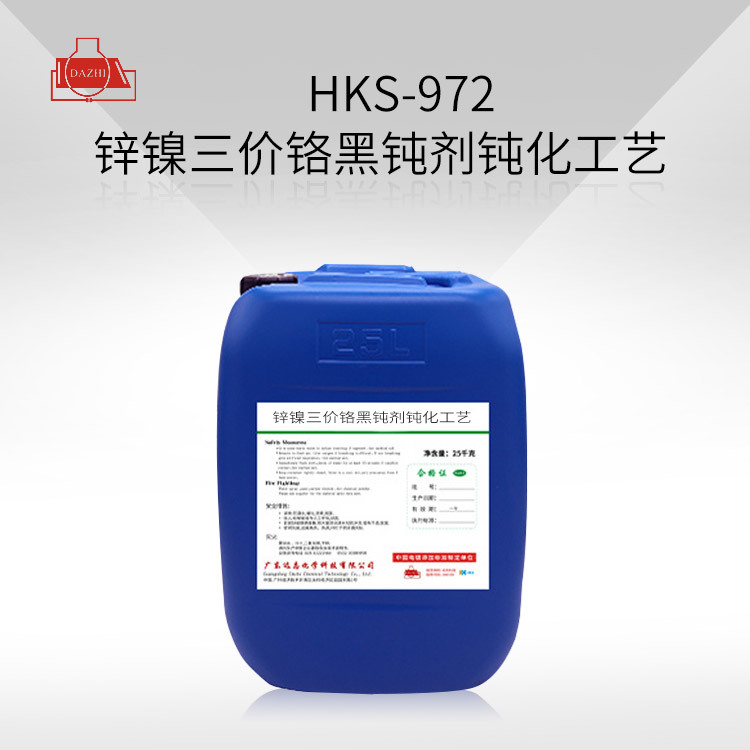
Zinc-nickel alloy passivator: How to improve the corrosion resistance of electroplated parts? In the electroplating industry, zinc-nickel alloy passivator is a commonly used chemical treatment agent to improve the corrosion resistance of electroplated parts. This article will introduce the principle of zinc-nickel alloy passivator, its use and its importance in the electroplating industry. At the same time, we will discuss how to improve the corrosion resistance of electroplated parts by optimizing the use of zinc-nickel alloy passivator. Zinc-nickel alloy passivator is a chemical treatment agent with anti-corrosion properties. By forming a uniform and dense zinc-nickel alloy passivation film on the surface of the plated parts, it effectively protects the plated parts from the external environment. This kind of passivation film has high corrosion resistance, wear resistance and high temperature resistance, and can extend the service life of electroplated parts. The method of using a zinc-nickel alloy passivator is relatively simple. First, the plated parts are pretreated, including the removal of oil and oxide on the surface. Then, the plated article is immersed in a solution containing a zinc-nickel alloy passivating agent, and a passivation film is formed on the surface of the plated article by a chemical reaction. Finally, the passivated plated parts are cleaned and dried to ensure the smoothness and quality of the surface. Zinc-nickel alloy passivator plays a vital role in electroplating industry. First of all, it can significantly improve the corrosion resistance of electroplated parts.
Oct 27,2023
What is Zinc Nickel Alloy Additive
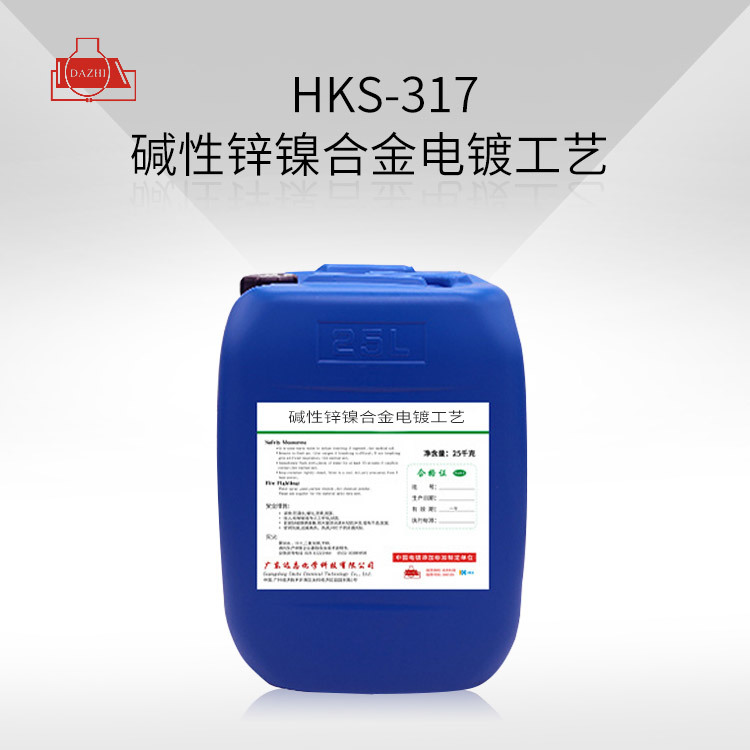
The zinc-nickel alloy additive is a doping element added to the zinc-nickel alloy to improve the performance of the zinc-nickel alloy. The role of 1. additives additives can improve the corrosion resistance, oxidation resistance, wear resistance of zinc-nickel alloy, and optimize its mechanical properties. The addition of trace elements can adjust the grain boundaries of zinc-nickel alloys and refine the grains, thereby enhancing the overall properties of the alloys. 2. common additives 1. Chromium: can improve the corrosion resistance of zinc-nickel alloy, making it better acid and alkali resistance. At the same time, it also improves the high temperature mechanical properties of the alloy. 2. Aluminum: zinc-nickel alloy can generate gamma phase, enhance the corrosion resistance of the alloy. Mechanical properties can also be improved. 3. Molybdenum: can improve corrosion resistance, especially the gap corrosion resistance. Creep resistance can also be enhanced. 4. Copper: It can be dissolved in zinc-nickel solid solution to improve the corrosion resistance of the alloy. But excessive will reduce the plasticity. 5. Titanium: It can significantly improve the high temperature mechanical properties and oxidation resistance of the alloy. 6. Cobalt: Improve high temperature strength and creep resistance, but also enhance hardness. But the corrosion resistance decreased slightly. 7. Carbon: forms carbides to strengthen the alloy, but also reduces plasticity. 3. addition method is generally in the smelting process to add doped elements, or the use of surface alloying.
Oct 20,2023
Environmentally friendly cyanide-free copper plating process has the following advantages:
The environment-friendly cyanide-free copper plating process has the following advantages: 1. The plating solution does not contain cyanide and no cyanide pollution. 2. The process is simplified, the copper plating rate is fast, and the quality is good. 3. The operating conditions are mild, easy to control and save energy. 4. bright coating, high degree of density, good adhesion. 5. The plating solution has high stability and long service life. 6. The requirements for the base material are not strict, and copper plating can be directly on the steel plate. 7. The plated copper layer has high purity and uniform quality. 8. The plating solution is easy to regenerate, less pollution and convenient to handle. 9. Improve the working environment and reduce occupational hazards. 10. Low cost, economic and environmental protection, suitable for mass production. Meet the requirements of environmental protection and promote the green development of the industry. In summary, the environment-friendly cyanide-free copper plating process is simple and efficient, and the realization of environment-friendly production is the development direction of the electroplating industry.
Oct 16,2023
The working principle of zinc nickel alloy additives mainly has the following points:
The working principle of zinc-nickel alloy additives mainly has the following points: 1. Zinc-nickel alloy is an important anti-corrosion material, additives can improve its performance. 2. Commonly used additives include titanium, chromium, etc., which can improve the corrosion resistance of zinc-nickel alloy. 3. Titanium has an active effect and can increase the rate of passivation film formation. 4. The addition of chromium can reduce defects and improve the resistance to stress corrosion cracking. 5. The addition of nitrogen increases the strength of the alloy and stabilizes the austenite phase. 6. The addition of boron can promote recrystallization and refine grain size. 7. Aluminum can improve the high temperature corrosion resistance, but a large amount of addition will reduce the plasticity. According to the different use environment, choose the appropriate additives and content. The addition of additives can cause the change of microstructure and microstructure. 10. Need to control the composition and quantity of additives, balance the performance. In summary, the comprehensive properties of Zn-Ni alloy can be effectively optimized by selecting appropriate additives.
Oct 10,2023
What is an acidic zinc-nickel alloy passivator
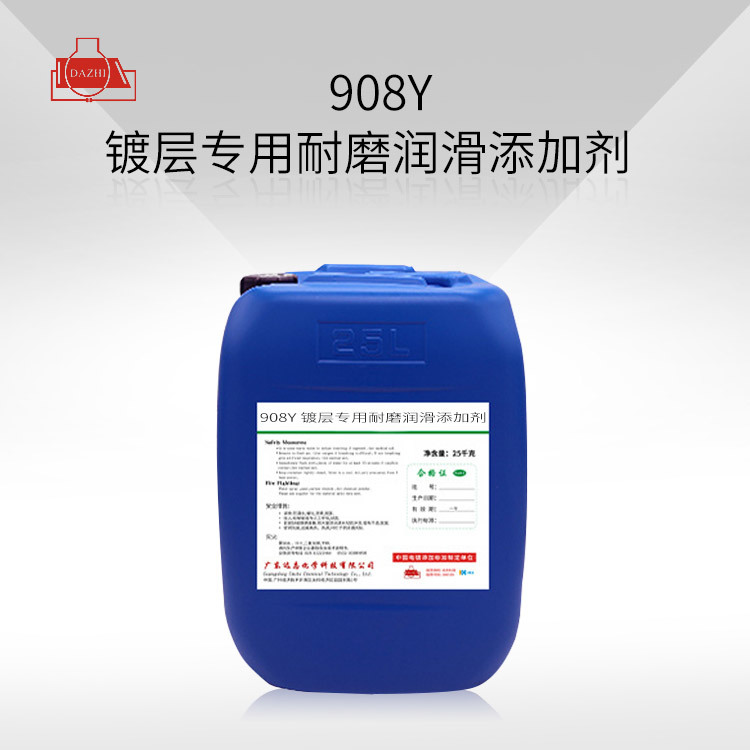
Acid zinc-nickel alloy passivation agent is used for zinc-nickel alloy passivation treatment of a chemical liquid, has the following characteristics: 1. the main components of nitric acid, phosphoric acid, sulfuric acid and other inorganic acids. 2. Contains corrosion inhibitors that inhibit corrosion. 3. The formula has been carefully adjusted, moderate acidity. 4. Through the chemical reaction to generate a film, play a passivation protection. 5. It can promote the formation of dense passivation film on the surface of the alloy. 6. The passivation quality and corrosion resistance are greatly improved. 7. Avoid white rust and other corrosion phenomena. 8. It can be used by spraying, soaking, etc. 9. Excellent tissue coverage and uniformity. 10. The mechanical properties of the alloy will not be affected after treatment. 11. Environmental protection non-toxic, can be washed after treatment. 12. A wide range of applications, such as aviation, electronics, chemical and other industries. In summary, the acidic zinc-nickel alloy passivator can efficiently generate a passivation film and improve the corrosion resistance.
Oct 07,2023
What is a cyanide-free plating additive
Cyanide-free plating additive is a new type of cyanide-free plating additive, which is used to replace the toxic additives in traditional cyanide plating and realize a more environmentally friendly plating process. Its specific characteristics can be summarized as follows: 1. The composition of cyanide-free plating additives is mainly composed of organic acid salts, synthetic alcohols and brightening agents, and does not contain toxic and harmful substances such as cyanide. 2. Working principle Cyanide-free plating additives play a role in stabilizing the electrolyte, improving the solubility of metal ions and improving the quality of the coating. 3. Environmental protection properties Cyanide-free electroplating completely free of cyanide, the operator and the environment damage is small, belongs to the green environmental protection products. 4. Applicable metal types can be used for chrome plating, zinc plating, nickel plating, copper plating, silver plating and other metals without cyanide plating process. 5. The quality of the coating compared to cyanide plating, cyanide-free plating coating more dense, more excellent corrosion resistance. 6. Easy to operate, good weldability, wide operating temperature range, easy to use and maintain. 7. The brighter color additive contains the brightening component, which can obtain a brighter coating appearance. 8. applicability can be widely used in tools, hardware accessories, auto parts and other fields.
Sep 27,2023
The effect of zinc-nickel alloy color passivator can be described from the following aspects
The effect of zinc-nickel alloy color passivator can be described from the following aspects: 1. improving the corrosion resistance of zinc-nickel alloy, zinc-nickel alloy color passivator can form a dense passivation film on the surface of zinc-nickel alloy, which has a good protective effect, can prevent the erosion of micro-environment, block the invasion of corrosive medium to the substrate, thus significantly improving the corrosion resistance of zinc-nickel alloy. This is mainly because: 1. the passivation film has a uniform and dense structure, which can effectively prevent the penetration of the corrosive medium and extend the diffusion path of the corrosive medium to the surface of the substrate. 2. The passive film itself has low component activity, is not easy to occur electrochemical reaction, and can inhibit the dissolution of zinc-nickel alloy substrate. 3. The passivation film has a certain ability to repair, even if the film micro-defects, but also through the sealing repair, continue to play a protective role. 2. improve the wear resistance of zinc-nickel alloy zinc-nickel alloy color passivation treatment can generate a layer of hard passivation film, the hardness of this layer of passivation film is significantly higher than that of zinc-nickel substrate, so it has good wear resistance. The surface of the zinc-nickel alloy after passivation treatment is not easy to produce scratches, and the service life can be significantly extended. This is mainly due to: 1. The hardness of the passivation film is higher and it is more difficult to be worn. 2. Even the substrate
Sep 20,2023
The main effects of galvanized black passivator include:
The main effects of galvanized black passivator include: 1. Good anti-rust effect can form a dense black passivation film in the galvanized layer to improve the anti-rust ability. 2. Uniform and beautiful black appearance can be obtained after uniform color treatment. 3. The film forming speed is fast, the passivation reaction is fast, and the coating generation speed is fast. 4. Good coating adhesion Passivation film can improve the adhesion of subsequent coatings. 5. The operation is simple and can be used directly with the galvanizing process, without separate treatment. 6. The scope of application can be used for steel, hardware and other different galvanized products. 7. Stable quality, stable product quality, good repeatability. 8. Corrosion resistance has strong corrosion resistance. 9. Safety and environmental protection adopt non-toxic environmental protection formula, safe operation. 10. Low cost without separate equipment, passivation treatment cost is low. In summary, the galvanized black passivator can effectively improve the rust resistance of the galvanized layer and is simple and economical to use.
Dec 02,2020
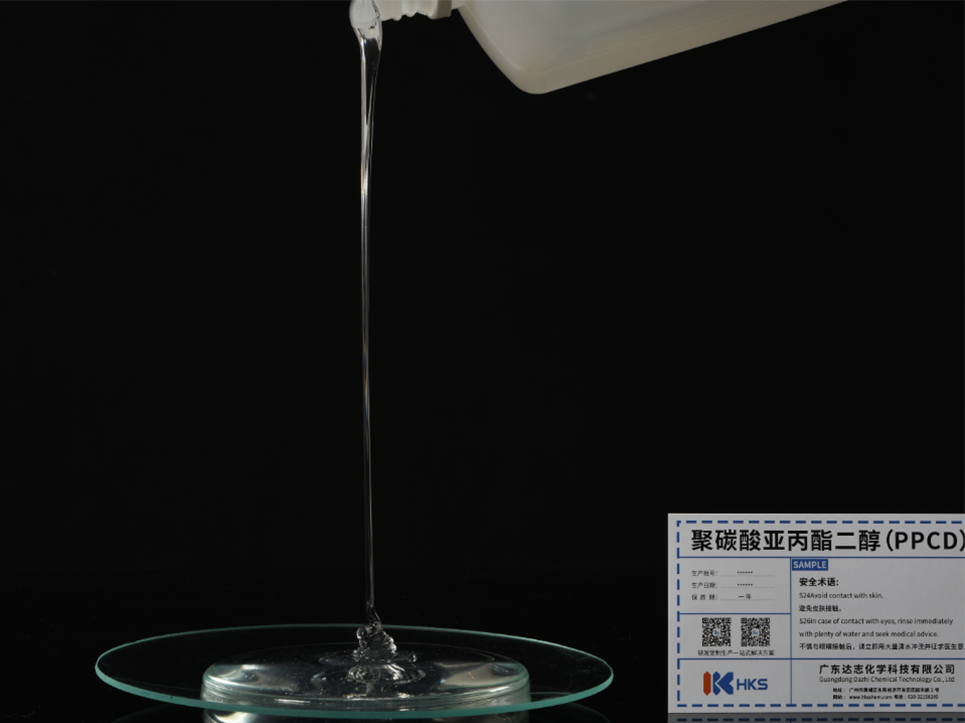
What is the effect of polypropylene carbonate diol
Poly (propylene carbonate) diol (PPC) is an aliphatic diol with high mechanical properties and high hydrolysis resistance.

Sep 23,2020
Anti-corrosion and anti-rust, hot-dip galvanizing technology plays an important role
The reason why the zinc-steel guardrail produced by the protection can be used in the air-polluted cities and coastal areas corroded by sea salt is that the "help" of hot-dip galvanizing technology is indispensable ".

Contact Us
E-mail:
sales@dazhichem.com
Phone/WeChat:
+86-18520125168
Address:
No.1 Tianyuan East Road, Yonghe Economic Zone, Huangpu District, Guangzhou City
CONTACT US
Guangdong Dazhi Chemical Technology Co., Ltd
Email: sales@dazhichem.com
Phone/WeChat: 86-18520125168
Address: No.1 Tianyuan East Road, Yonghe Economic Zone, Huangpu District, Guangzhou City


